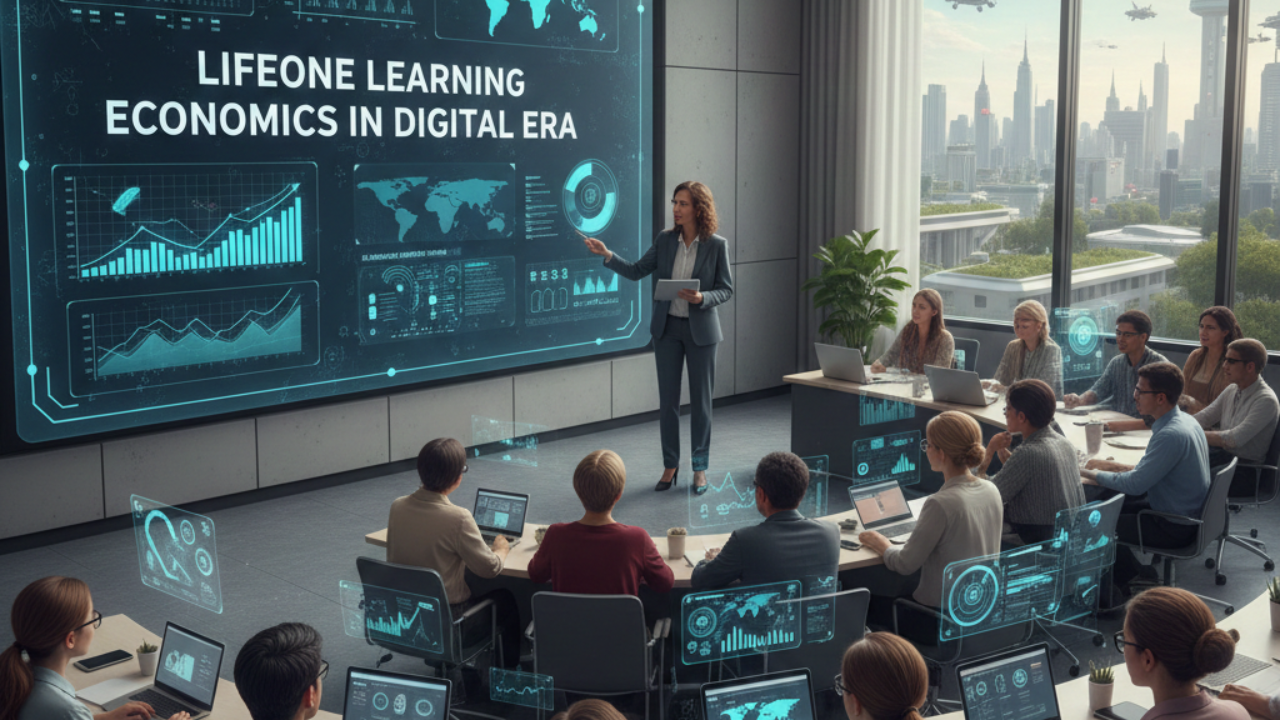
Significant reformulation of the operation of the economies, the manner in which businesses are conducted and also the manner in which individuals can pursue a profession has been transformed with the intensive development of digital technologies. Automation, artificial intelligence, utilization of data-driven choices, and remote work are the new normal of the modern economy as opposed to the old ones.
Lifelong learning under such an arrangement is no longer a choice but an economic need. Individuals, organizations, and states are becoming sensitive to the necessity to undergo continuous skill development to become competitive, adaptable, and resilient during the digital era. Lifelong learning economics refers to the growing entanglement between value creation and lifelong learning in economics.
The disruption in technology is accelerating the pace of obsolescence of knowledge and skills. This means that employees who update their skills on a regular basis will have the advantage of remaining in the job, earning higher wages, and contributing to the innovation and productivity fields. At the macro level, the economies that have invested in digital education and reskilling.
Is Lifelong Learning in the Digital Age So Important?
The lifelong learning is necessary because the digital economy is dynamic. The ten-year-old jobs have either reformed massively or have simply vanished since new jobs continue being created in the technological sectors, creative industries, and information-driven sectors. The workers will at the risk of being rendered outdated terms of skills, reduced earning potential, and joblessness.
The labor market flexibility the economic context is achieved through the achievement of lifelong learning. The workers who will always have new skills at their disposal can change industries, acquire new tools, and adjust to new market requirements. Through this flexibility, structural unemployment reduced and the economy able to survive during periods of technological change or crisis in the world.
When companies invest in employee learning, the outcome is high productivity, innovation, and competitive advantage in the business environment. Business organizations with skilled personnel better placed to adapt to digital technologies, automate their businesses, and think of new business models. The other beneficiary is the governments that will be in a position to have a talented population.
What are the 5 most valuable Digital Skills to have?
As the digital economy develops, certain skills have become very handy in the industries. The development of competence can add much to the earning power and employability:
- Digital Literacy: This refers to the understanding of the use of the digital devices, platforms, and web systems. This includes navigation of cloud systems, electronic communication programs, and web collaboration programs.
- Data Analysis and Interpretation: The contemporary organization rests on the basis of data-based decision-making. Analysis of data and interpretation of patterns and inferences are all skills that are in increasing demand.
- Cybersecurity Awareness: As the digital activity grows, the cyber risks are growing. The basic concept of cybersecurity helps one and organizations to provide safe and secret information and systems.
- Artificial Intelligence and Automation Capabilities: The awareness of AI tools, automation flows, and machine learning concepts would assist the workers to collaborate with the high-techs instead of competing with them.
- Creative and Critical Thinking: Although automation made to help in the execution of regular duties, creativity and problem solving in humans cannot be substituted. Some of the skills that are relevant in the digital environment are innovativeness, strategic thinking, and adaptability.
These skills should not possessed by technology professionals only. They increasingly used education, financial, medical, production, and creative areas, enhancing the concept of lifelong learning for all employees.
Economic Effects of Continuous Learning
Lifelong learning economics do not apply only to personal career benefits. At the society level, lifelong learning assists in developing a non-discriminatory society since workers with diverse backgrounds are able to exploit new opportunities. In particular, the digital learning platforms can help reduce the disparity in education because they render the access to the quality material at comfortable prices.
Lifelong learning also contributes to entrepreneurship and innovation. Individuals with new digital ability are more likely to be able to start businesses, innovate new products, and participate in the gig and creator economies. This entrepreneurship practice results in job creation, productivity, and diversification of the economy.
However, challenges remain. Not every person has equal access to digital infrastructure, good education, and time to indulge in continuous learning. Governments, educational organizations, and other organizations in the private sector must work together in an effort to address these gaps in such a manner that lifelong learning systems are comprehensive and affordable and geared towards the labor market demands.
The building of a Learning Based Economy that is Sustainable
To have a sustainable digital economy, economic systems and cultures of the workplace have to designed in such a way that they provide lifelong learning. Reskilling and upskilling activities ought to prioritized by employers, and governments need to support the policies encouraging the continuous learning process by offering incentives.
Links between corporations and the state, and investing in digital infrastructures. The educational institutions also play a significant role in the sense that they reform curriculum to become more adaptive and digitally competent and practically relevant. Lifelong learning is both the approach and the attitude towards economics as practiced by people.
Workers welcome lifelong learning with the hope that they will be relevant, sure, and strong enough to be able to live in the rapidly changing world. As the digital change sweeps through at high speed, it is the individuals who will continue learning, adapting, and innovating who will be the ones who are economically ahead, and the digital era can thus be sustainable and inclusive.