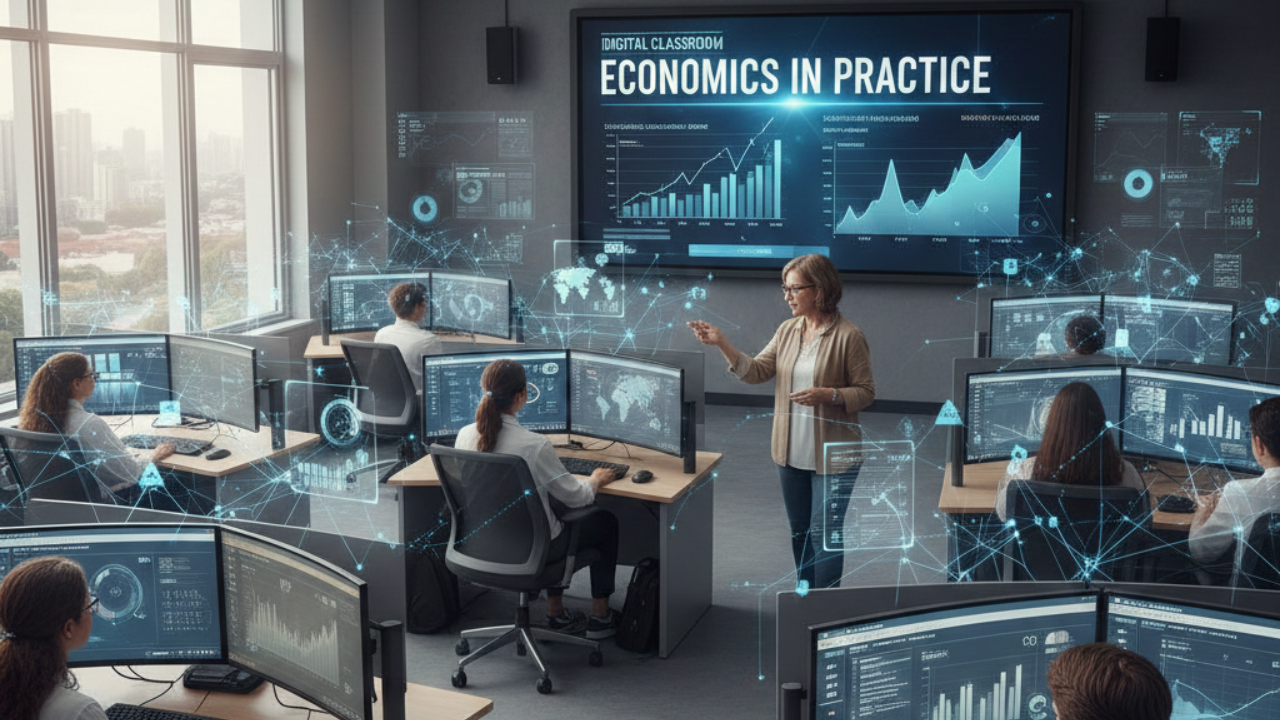
The fast adoption of digital technology in classrooms has revolutionized the classes in a global sense. It not only changed how the kids learn but also the manner in which the schools utilize their resources and create value. Online learning is an emerging element in modern education strategies, and it includes online classrooms, learning management systems, and online interactive tools and data-driven teaching.
DLEs are revolutionizing elementary school education in terms of cost, accessibility, and performance using university and even professional education. The functionality of digital classrooms as far as money is concerned should made known to all the policy makers, teachers, and schools.
Digital infrastructure, training of teachers, and investment education software cheap in the short run but compensated over the long run in terms of scale and cost-effectiveness and access to quality education as well. The digital classrooms are not only a novel mode of learning, but they are also a business model that will shape the future of the world learning system due to the growing closeness.
The Future of online classrooms
The future of the digital classrooms is highly dependent on the transformation of the technology, the transformation of the job market and the needs of the students. It is presumed that digital education will not limited to the basic online courses alone but will of a more personalized, immersive, and data-driven learning.
AI and machine learning will help to make the classes more individual to every learner, make the learning process faster and decrease the number of school dropouts. It is also recommended that virtual and augmented reality technologies will improve experiential learning, especially these fields, such as physics, engineering, medicine, and economics, where expensive physical resources may substituted with a simulation.
Digitally, the classroom is economically advantageous to the school, offering them the chance to enlarge education services yet, simultaneously, without adding the costs. Thousands of people taught one online course all over the world and thus the unit price per student goes down. It is possible that governments and schools will keep spending money on digital infrastructure under the pretext of leveling.
What are the classroom applications of digital technology by teachers?
Digital technology the classroom is a tool applied by the teachers to assist in classroom instructions, get the students more involved and help the students learn. Learning management systems (LMS) are online portals and virtual classrooms that assist teachers in sharing their resources, tracking the progress of their students and also communicating with each other.
These systems can draw things out in a better and more accountable fashion, besides minimizing the administrative cost. The interactive applications may involve a digital whiteboard, a learning application, and multimedia information in which individuals ar allowed to work and interact. The students can get comments on a real-time basis, chat, and do a group assignment anywhere.
This comes in especially handy in the online and physical learning environments where students take classes. Another sphere of intensive digital technology application is data analytics. The teachers and administrators can save the performance data and can know where a student is lagging and can use resources better. This fact and figure-giving ability of schools enables maximum investment.
What are the examples of digital learning in real life?
Digital learning may implemented in the classroom a variety of different ways, with the simplest tools up to highly advanced websites. An example of such blended learning. It involves face-to-face teaching on an online source of materials. At home, students would able to listen to lectures, which were recorded, and take the opportunity to use the time in the classroom to discuss.
What they have learned, solve problems, and rehearse what they have heard. The other instance is the adaptive learning platforms that change the degree of the material based on the performance of the student. These platforms enable the students to study at their own rate, thereby lowering the cost of the remedial programs and ensuring that all processes are smooth.
People also widely use such tools as virtual classes and video conferencing in professional training and higher education. They help the schools reach students elsewhere at a lower cost of infrastructure and higher enrollment. The other reason why the standard techniques not good compared to the digital is that they involve carrying out digital simulations, gamified learning applications, and online assessments.
Sustaining the Digital Learning Ecosystems
The concept of digital classroom economics proves the importance of sustainable and correctly developed systems of education that are both affordable and accessible to everyone. Online classrooms are no longer an experiment; the online classes have become an important part of the modern education systems.
They should also be capable of making ingenious investments, have working policy frameworks and keep track of the performance of students to emerge successful. Digital classrooms will become important considering the changes in technology in education in terms of equipping the students with a knowledge-based economy.
The digital learning systems can be able to provide scalable, high-quality education that satisfies the needs of the next generation and adds to the economic growth of the economy in the long run through the combination of economic effectiveness and pedagogical effectiveness.