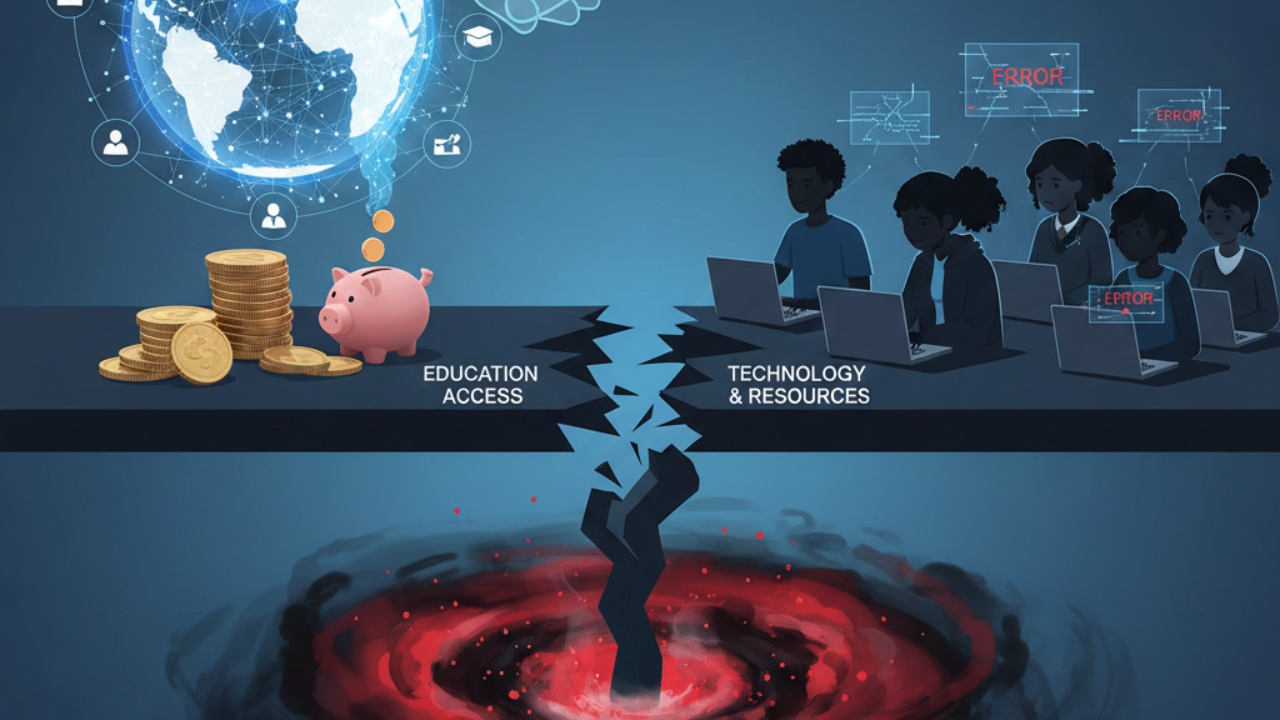
Remote learning has redefined the way people learn across the world, as it gives people and organizations a collection of options and it is more convenient to access and flexible. The advent of technology and world problems has made online and hybrid learning paradigms major constituents of the present education systems.
Nevertheless, there are plenty of financial concerns that guarantee that online education is not as efficient, equitable, and sustainable. Schools, colleges, and governments are yet to understand how they can afford online classes in a way that would lead to actual learning. Remote education does not imply only the price of a computer or the payment of the subscription service of videoconferencing programs.
Long-term investment in such aspects as infrastructure, digital content, teacher training, student support systems, and information security is it. Not everyone has access to finance equally, and this has augmented educational inequalities in regions, institutions, and groupings of people based on socioeconomic lines. Policymakers and educators should know these money problems and be ready.
What do you consider to be the most significant disadvantage of online learning?
One of the biggest problems of online education is the absence of long-term and fair financing. Online learning is not necessarily deemed as being cheap and the truth of the matter is that quality online learning expensive affair that consumes a lot of money and time. To achieve sustainability and productive learning, institutions need to invest in reliable internet connections.
Learning management software, cybersecurity protocols, and electronic teaching tools. The other gigantic problem is the digital divide. Most of the students are not well equipped in terms of accessing good internet with proper devices and no distractions to study. To cover this shortfall, we have to use money on infrastructure and deliver gadgets and learning centers.
Students who live in rural and underserved areas may not be able to use online education because they cannot afford the money. Also, technical support and student services are not always available in universities because they do not have the money necessary to offer such services. Online students are in need of academic advice, psychological support, and technical help as much as students on campuses.
Why is active learning not so effective?
Active learning is a pedagogical approach that stresses engaging the students, making them work and think instead of receiving knowledge passively. The active learning is quite efficient, and its application in the remote place might not be the easiest one regarding the expenses and performances. Major concerns are the cost of interactive digital content (simulations) production, virtual labs, and collaboration systems.
Another cost that is extremely expensive is faculty training. The teachers supposed to familiarize themselves with the ways in which they teach them using the digital technologies and how they can teach in a way that makes them have active learning with the use of online means. The design and instruction and design, as well as professional development and workshops, all need regular funding.
Without proper training, the teachers may use the method of lecture, which does not enable the students to communicate and interact with each other. The technology and the number of students in the classroom also pose a challenge to active learning. To ensure that people engage online, smaller classes, breakout areas, and systems that would give you immediate feedback are usually essential.
What is the most problematic thing in higher education today?
The most challenging issue in higher education nowadays is how to find a balance between the need to earn money and make education affordable and, at the same time, high-quality. Universities pressurized more and more to offer more services that are digital; there is less funding being issued by the public, their cost is rising and student expectations are rising.
Distance education has merely made the already constrained budgets even more stringent. Colleges and universities have to make investments in the digital revolution and maintain the physical campuses, pay off their professors, develop research, and provide the services to students. This two-sided model puts the finances under great pressure.
The low-priced tuition is also an appeal to students, as well as the flexibility and skill to learn that can win employment. This means that the schools have no choice but to be innovative with minimal funds. The other colossal problem is proving the importance of higher education in the fast-changing employment arena. These institutions need to sustain their curriculum and incorporate the skills of digital.
Increasing the funding of Digital learning
Governments, schools, digital communities, and communities must work together so as to resolve the problems involved in the funding of remote education. The fairness, quality, and new ideas on the sustainable models of funding need to taken care of and should have the ability to change with the changing needs of the learners. The education systems ought to be robust by ensuring.
That they are budget-friendly, make evidence-based decisions, and also have long-term plans. Remote learning is not only capable of halting at the fixes but also capable of accomplishing the definitive changes by making sure that the funds correspond to the teaching goals and the needs of the student support.
Digital learning also have the potential of making learning cheaper and more entertaining and preparing the students better in a world that is rapidly changing as long as it is financed adequately. The future of education is not just based on technology. It is also dependent on a commitment to fund it in a wise and fair way.